


Idiosincrasia di Panama: curiosità e segreti sorprendenti
25/05/2026
Receive SMS from my usual number abroad
16/08/2026
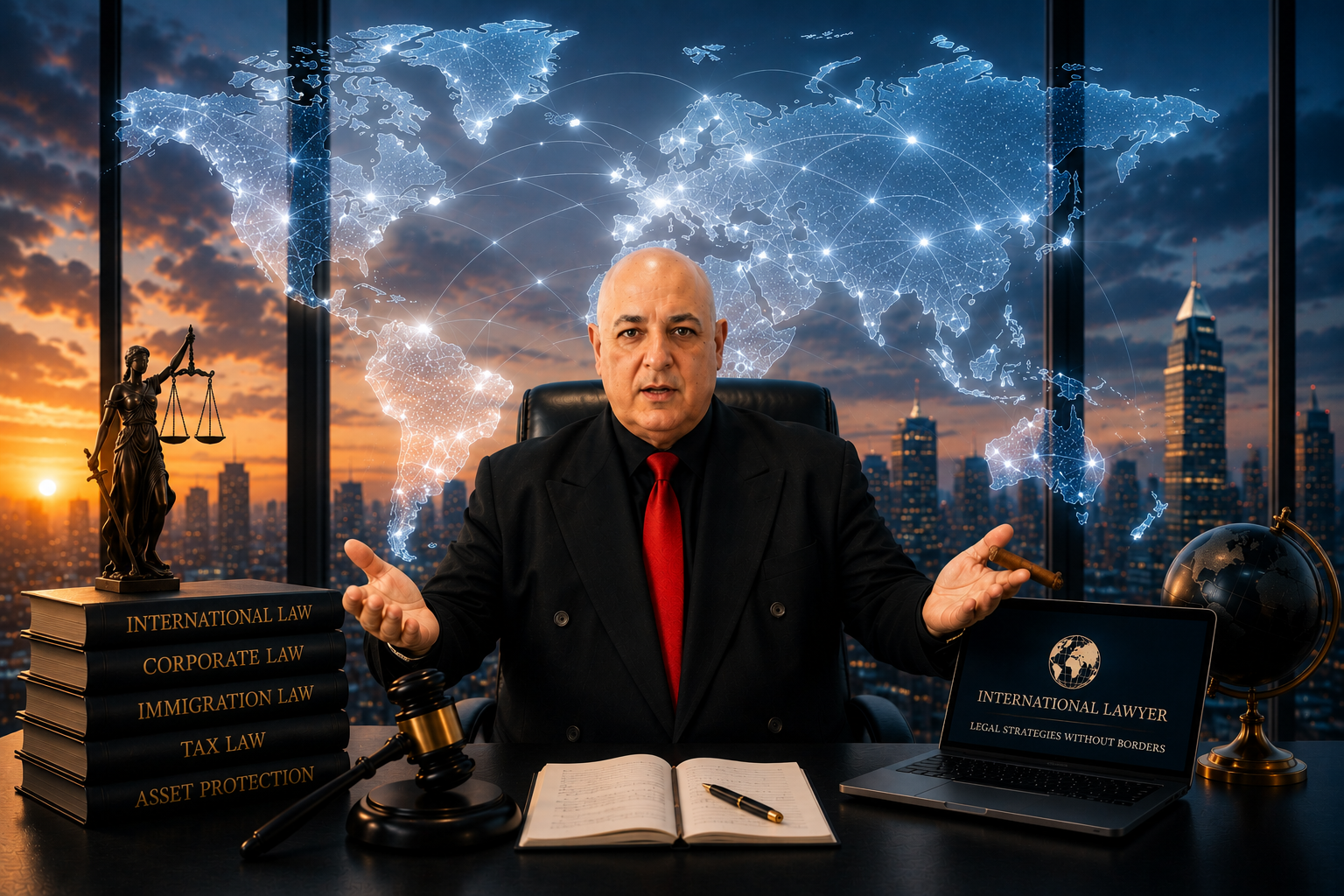
Discover what an International Lawyer does, how they protect assets and global structures, and why their role is essential nowadays
The figure of the International Lawyer has acquired extraordinary relevance in recent decades. Globalization, the growth of cross-border business, migratory mobility, and the digitalization of professional services have profoundly transformed the way modern legal practice is carried out. Today, an International Lawyer is no longer limited to working within a single jurisdiction. Their role extends to strategic consulting, asset protection, business mobility, immigration, international taxation, and legal coordination between different countries.
For much of the 20th century, the legal profession was strongly linked to a specific territory. The traditional lawyer worked within a local legal system and depended mainly on clients located in the same city or country. Expansion into foreign markets was complex, costly, and in many cases practically impossible. In this context, the law firm Caporaso & Partners of Panama, through its founder, international lawyer Giovanni Caporaso Gottlieb, has extensive experience in offshore jurisdictions. In addition, it has continuously operated in the creation of corporate structures, foundations, trusts, and in the legal assistance of clients in Albania, Brazil, Colombia, Cuba, Spain, the United States, Haiti, Italy, the Dominican Republic, and Venezuela.
However, the technological revolution and the rise of digital communications radically changed this landscape. Currently, the International Lawyer can assist clients located in different parts of the world through videoconferences, digital document management systems, and telematic platforms. Physical distance has ceased to be an absolute barrier to the provision of legal services. The modern International Lawyer does not sell only working time. They sell experience, specialized knowledge, strategic capacity, and solutions adapted to global scenarios. This is particularly important in areas such as immigration, tax planning, offshore company incorporation, asset protection, international banking, and cross-border trade.
The International Lawyer in the Immigration Field
In the immigration field, for example, the International Lawyer plays a fundamental role. Thousands of people today seek residency alternatives, second citizenships, or international structures that allow them to diversify economic, fiscal, or political risks. In this context, the professional must know not only the local laws of one country, but also international treaties, consular requirements, tax implications, and international compliance regulations. One of the clearest examples of this evolution can be found in international legal consulting related to the United States. A foreign lawyer may offer strategic consulting and document preparation for clients located outside the U.S., provided that they respect the applicable rules regarding professional practice and transparency.
The International Lawyer must operate with absolute clarity regarding their professional status. Transparency is essential to avoid conflicts, claims, or misunderstandings. Therefore, it is indispensable to clearly specify in contracts, websites, and public communications in which jurisdiction they are authorized to practice and what the exact scope of their services is. Trust constitutes one of the most important assets for any International Lawyer. International clients often face complex scenarios involving multiple jurisdictions, languages, banks, and regulations. Consequently, they seek professionals capable of transmitting security, technical knowledge, and practical experience.
Another essential aspect is cultural adaptability. The International Lawyer frequently works with clients from different countries and cultural contexts. This requires advanced communication skills, speaking several languages, intercultural understanding, and the ability to interpret different expectations depending on the client’s legal or business environment. Digitalization has also transformed legal marketing. Today, the International Lawyer needs to build a strong digital presence. Social networks, professional websites, specialized articles, and informative videos have become fundamental tools for positioning in the global market.
International Lawyer and Global Legal Communication
In the past, a lawyer’s reputation depended mainly on local word-of-mouth recommendations. Currently, the International Lawyer can build professional authority through educational content published on the internet. Modern clients research, compare, and evaluate professionals before hiring legal services. Therefore, the creation of relevant and specialized content has become an indispensable strategy. The figure of the International Lawyer is also closely related to asset protection. In a world marked by economic crises, geopolitical conflicts, inflation, and increasing tax pressure, many people seek international legal structures that allow them to diversify risks. Private foundations, offshore companies, trusts, and international asset structures form part of the daily work of numerous international professionals.
Panama, Dubai, Singapore, the United States, and other international financial centers have become frequent destinations for clients seeking global legal solutions. The International Lawyer must deeply understand these jurisdictions, their advantages, limitations, and regulatory risks. In addition, international regulatory compliance has become much stricter. Regulations such as FATCA, CRS, AML, and KYC have significantly increased controls over financial movements and international structures. For this reason, the International Lawyer needs to remain constantly updated regarding regulatory changes and global trends.
The COVID-19 pandemic further accelerated the digital transformation of the legal profession. Many in-person meetings were replaced by virtual consultations. Clients began to value speed, flexibility, and remote assistance capabilities more and more. This change definitively consolidated the global practice model. Currently, an International Lawyer can assist clients in Latin America, Europe, Asia, or the Middle East without needing to travel physically. However, this expansion also implies new ethical and regulatory challenges. Each jurisdiction has specific rules regarding legal advertising, professional representation, and the practice of law.

International Lawyer: Authority, Trust, and Digital Presence
For this reason, prudence is essential. The International Lawyer must avoid exaggerated promises, questionable strategies, or consulting outside their field of competence. Professional reputation can be destroyed quickly in a globalized environment where information circulates immediately. Another important element is specialization.
The international legal market is extremely competitive. It is no longer enough to be a general practitioner. The successful International Lawyer usually develops concrete experience in specific areas such as immigration, international taxation, compliance, banking, corporate law, or asset protection. Building a professional brand has also become a strategic component. Today, the International Lawyer acts not only as a jurist, but also as a communicator, content creator, and opinion leader in their area of specialization.
Digital authority can open enormous professional opportunities. An educational video, a specialized article, or a well-positioned interview on the internet can attract clients from multiple countries. For this reason, many professionals today invest in SEO positioning, social networks, and digital legal marketing strategies. However, content must always maintain technical rigor and ethical responsibility. The pursuit of visibility cannot replace professional quality. A true International Lawyer must balance digital presence, legal knowledge, and professional credibility.
The international mobility of people and capital will continue to grow during the coming decades. More and more individuals seek alternative residencies, international structures, and cross-border legal advice. This scenario will continue expanding opportunities for the International Lawyer. Artificial intelligence will also begin transforming part of legal work. Automated tools already allow document analysis, draft generation, and acceleration of administrative processes. Nevertheless, legal strategy, negotiation, and professional judgment will continue to depend on the human factor.
International Lawyer, Technology, and Business Vision
The International Lawyer of the future will probably combine legal knowledge, technology, digital marketing, and business vision. They will no longer be merely a legal technician, but a global advisor capable of integrating multidisciplinary solutions. In addition, the growth of remote work has driven new legal needs. Digital entrepreneurs, digital nomads, international investors, and global families increasingly require advice regarding residency, taxation, and international structures.
Continuous education becomes indispensable. Laws constantly change and international regulations evolve rapidly. The International Lawyer must study permanently in order to remain competitive. Professional ethics also acquires a global dimension. A mistake in an international environment can generate reputational, financial, and legal consequences in multiple jurisdictions. Therefore, diligence and transparency are fundamental.
Ultimately, the International Lawyer represents a natural evolution of the legal profession in a globalized world. Technology eliminated many physical borders, but at the same time increased the need for prepared, specialized, and ethically responsible professionals. The growth of international business, migratory mobility, and digitalization will continue driving this professional figure during the coming years. Those lawyers capable of adapting to this new paradigm will gain access to a much broader and more dynamic global market. The International Lawyer does not only interpret laws. They connect jurisdictions, protect global interests, and help people navigate an increasingly complex and interconnected legal environment.
The International Lawyer can also play a fundamental role as supervisor and strategic coordinator of national lawyers in cases involving foreigners, international structures, or conflicts between different jurisdictions. In many immigration, asset, corporate, or tax matters, the client simultaneously needs local legal assistance and a global vision capable of connecting different legal systems. In addition, the International Lawyer can help avoid coordination errors between law firms from different countries. Many times, an apparently local problem can generate fiscal, migratory, or asset-related consequences in another jurisdiction. For this reason, international supervision acquires great importance for foreign clients, investors, entrepreneurs, and families with global interests.
Frequently Asked Questions About the International Lawyer
What does an International Lawyer do?
An International Lawyer advises clients on legal matters related to multiple jurisdictions, including immigration, international business, taxation, asset protection, and global corporate structures.
Does an International Lawyer need a license in every country?
Not necessarily. It depends on the type of service provided and the regulations of each jurisdiction. However, they must act transparently and respect the applicable rules regarding professional practice.
Can an International Lawyer assist clients online?
Yes. Currently, many international legal services are provided remotely through videoconferences, digital platforms, and telematic document management.
What are the most requested areas for an International Lawyer?
The most requested areas include immigration, international residency, offshore banking, international taxation, asset protection, compliance, and international corporate law.
Why hire an International Lawyer?
Hiring an International Lawyer allows clients to have a global strategic vision in matters involving several countries, different legal systems, or international asset risks. Many immigration, tax, corporate, or banking operations can generate simultaneous consequences in different jurisdictions. The International Lawyer helps coordinate legal structures, prevent regulatory conflicts, and protect the client’s interests from a broader and more specialized perspective.
When should you hire an International Lawyer?
It is advisable to hire an International Lawyer when a person, company, or family has interests in more than one country. This includes immigration procedures, foreign investments, opening international bank accounts, creation of offshore companies, asset protection, international tax planning, inheritances with assets located in different countries, or cross-border legal conflicts. The earlier the International Lawyer participates in the planning, the greater the possibilities of preventing risks and costly mistakes.
Why are more and more people seeking an International Lawyer?
Because globalization has increased the mobility of people, companies, and capital. Many people need legal solutions involving several countries and legal systems at the same time.